- Login
- |
- |
- |
- |
What is a Neighborhood Council?
What is a Neighborhood Council?
Neighborhood Councils serve as vital liaisons between local communities and City Hall. Council Board members are city officials elected by their peers to advise city leaders on key civic matters—including land development, environmental sustainability, homelessness solutions, community beautification, and emergency preparedness.
Funding & Scope Across Los Angeles
-
Civic Reach: There are 99 Neighborhood Councils across the City of Los Angeles, each serving an average population of 40,000 residents.
-
Taxpayer Funding: Every council receives an allocated annual budget dedicated to operational expenses, community outreach, local service projects, and public events.
Studio City Neighborhood Council Overview
The Studio City Neighborhood Council (SCNC) represents a vibrant, diverse hillside community situated along the north slope of the Santa Monica Mountains in the San Fernando Valley.
Community Snapshot
-
Coverage Area: Approximately 5.8 to 6.3 square miles.
-
Population: ~35,000 to 43,000 residents (density of 6,000–6,800 people/sq. mile).
-
Housing Profile: Roughly 15,000 to 20,000 total households, comprising a balanced mix of single-family homes, hillside estates, and low-rise apartments/condos (55% renters / 45% homeowners).
Key Advisory Responsibilities
The SCNC directly advises City Hall on the issues that impact Studio City's quality of life:
-
Development & Zoning: Guiding land-use planning, smart housing developments, zoning considerations, and local economic growth.
-
Sustainability & Environment: Promoting green initiatives, urban forestry, eco-friendly infrastructure, and local environmental protection.
-
Homelessness & Social Services: Advising city officials on supportive housing, community outreach, and key social resources.
-
Beautification & Public Works: Enhancing neighborhood aesthetics, park facilities, streetscapes, and infrastructure maintenance.
-
Emergency Preparedness: Building disaster readiness, public safety awareness, and community resilience programs.
Upcoming Meetings & Events
- Sep22 Youth Committee Meeting
- Sep23 SCNC Regular Board Meeting Meeting
- Oct01 Public Safety and Homelessness Committee Meeting
- Oct03 Tujunga Village ArtWalk
- Oct05 Outreach Committee Meeting
- Oct05 October Blood Drive
- Oct06 Cultural Affairs Committee Meeting
- Oct12 Columbus Day/Indigenous Peoples Day
- Oct31 Halloween
- Nov03 Election Day
- Nov09 Living With Coyotes Presentation
- Nov11 Veterans Day
- Nov26 Thanksgiving
- Dec09 Sepulveda Wildlife Reserve Presentation
- Dec25 Christimas
- Jan01 New Years Day
- Jan18 Martin Luther King Jr. Day
- Feb14 Valentines Day
- Feb15 Washingtons Birthday (Presidents Day)
- May09 Mothers Day
- May31 Memorial Day
- Jun13 Juneteenth
- Jun20 Fathers Day
- Jul04 Independence Day
- Oct01 Rosh Hashanah
- Oct10 Yom Kippur

Calendar
Keep up-to-date with the Studio City Neighborhood Council and Local events.
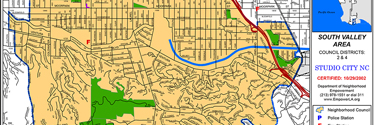
Area Boundaries and Map
View our neighborhood council boundaries for which we deal with.